
John the Baptist: Preparing the Way for Jesus
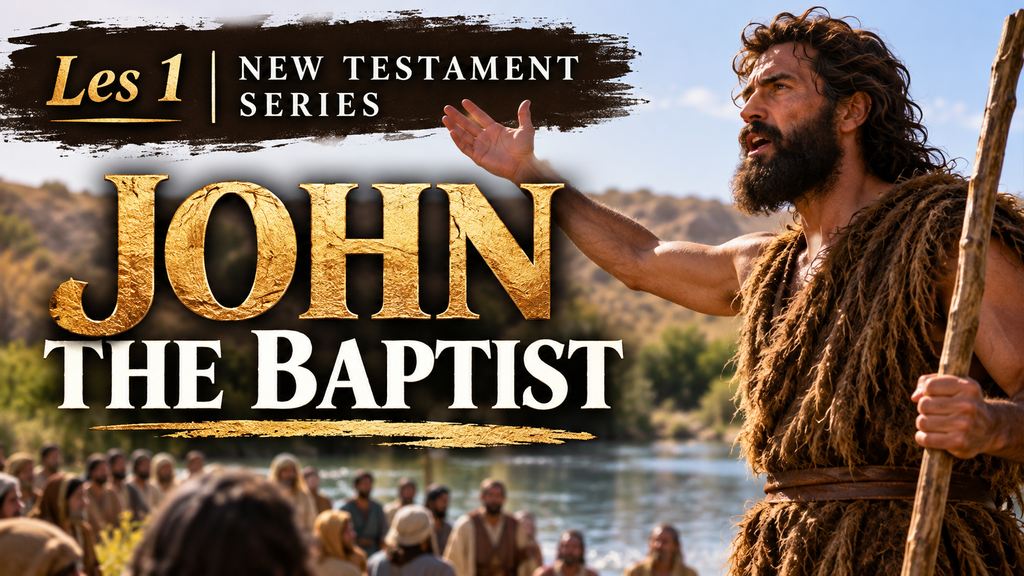
New Testament Bible Study • Lesson 1
Key Scriptures: Luke 1:13–17; Isaiah 40:3; Mark 1:2–8; Luke 3:8–14; John 1:29; John 3:28–30; Acts 19:4–6; Matthew 3:13–17
Welcome to the New Testament
The New Testament opens with the fulfillment of God’s promises concerning the Messiah. Its 27 books include the four Gospels, the book of Acts, 21 letters, and Revelation. The Gospels tell of Jesus’ life, teaching, death, and resurrection. Acts describes the early church and the spread of the gospel. The letters instruct believers in faith and daily living, while Revelation points to Jesus Christ and God’s final victory.
Before Jesus began His public ministry, God sent a messenger to prepare the people. His name was John the Baptist. John’s story reminds us that God keeps His promises, calls people to repentance, and directs our attention to Jesus Christ.
1. God Gives John an Assignment
Scripture focus: Luke 1:13–17; Luke 1:76–77
An angel announced to Zechariah that he and his wife Elizabeth would have a son named John. This child would have a special calling: he would turn many people back to the Lord and prepare a people ready for Him. John’s work was not an accident or a personal ambition. It was an assignment from God.
Luke describes John coming in the spirit and power of Elijah. This means his prophetic ministry resembled Elijah’s bold call to turn back to God; it does not mean that John was Elijah reincarnated. His life teaches us the importance of obeying the responsibilities God makes clear through His Word.
For our lives: We may not be called to a public ministry like John’s, but we are called to obey God faithfully in the opportunities before us.
2. Prepare the Way of the Lord
Scripture focus: Isaiah 40:3; Malachi 3:1; Mark 1:2–4
John preached in the wilderness, calling people to prepare for the Lord. The prophets had spoken of a messenger who would make the way ready. John fulfilled this role by calling people to repentance and readiness for the coming Messiah.
Think of a road being cleared before an important arrival. John was not preparing a literal highway; his message called people to deal honestly with sin and turn their hearts toward God. A heart that refuses correction is not ready to receive the truth.
For our lives: Ask whether there is an attitude, habit, or decision you are defending even though God’s Word calls you to change.
3. Repentance Should Produce Fruit
Scripture focus: Luke 3:8–14
John told the crowds to produce fruit consistent with repentance. Repentance is more than regret or an emotional moment. It involves turning away from sin and toward God, with a change of direction that becomes visible in everyday choices.
When people asked what they should do, John gave practical answers. Those who had extra clothing or food should share with people in need. Tax collectors were to collect no more than authorized. Soldiers were told not to extort money or make false accusations, and to be content with their wages.
These instructions reveal that repentance affects how we treat other people. Generosity, honesty, truthfulness, and the responsible use of authority are examples of its fruit. The fruit does not buy forgiveness; it demonstrates a response to God’s call.
John also warned that being descended from Abraham was no substitute for responding to God. Likewise, growing up in a Christian family, attending church, or knowing religious language cannot replace a personal response of faith and obedience.
For our lives: Identify one practical action that would show a changed direction in your relationships, words, or decisions this week.
4. John Points Everyone to Jesus
Scripture focus: Mark 1:7–8; John 1:29; John 3:28–30
John drew crowds, yet he never claimed to be the Messiah. He spoke of One coming after him who was far greater. When he saw Jesus, John identified Him as the Lamb of God who takes away the sin of the world (John 1:29).
John understood that his purpose was not to gather attention for himself. He was preparing people to recognize and follow Jesus. In John 3:30 he expresses the heart of humble service: Jesus must increase, and John must decrease.
This is an important lesson for every believer. Teaching, encouragement, and service should help others see Christ more clearly, not make us the center of attention.
5. Understanding John’s Baptism
Scripture focus: Mark 1:4–8; Acts 19:4–6
John preached a baptism of repentance as people prepared for the coming Messiah. He openly taught that his ministry pointed beyond itself to Jesus, who would baptize with the Holy Spirit.
In Acts 19, Paul met disciples in Ephesus who knew John’s baptism. Paul explained that John had told people to believe in the One coming after him—that is, Jesus. After hearing this, they were baptized in the name of the Lord Jesus. Paul laid hands on them, and the Holy Spirit came upon them.
The distinction matters: John was a messenger preparing the way; Jesus is the Savior to whom John directed people. A fuller study of Christian baptism and the Holy Spirit can be explored in a later lesson.
6. Jesus Comes to John for Baptism
Scripture focus: Matthew 3:13–17
Jesus came to the Jordan to be baptized by John. At first, John objected because he recognized Jesus’ greatness. But Jesus told him it was fitting to fulfill all righteousness, and John obeyed.
Jesus was not being baptized because He needed to repent of personal sin. Matthew describes the Spirit of God descending like a dove and a voice from heaven identifying Jesus as the beloved Son. This moment directs our attention to Jesus’ identity and the beginning of His public ministry.
John’s obedience reminds us that even when we do not understand everything, we can respond faithfully to what the Lord makes clear.
7. Faithful Service Through Difficulty
Further reading: Matthew 11:2–11; Matthew 14:1–12
John’s faithful ministry did not protect him from opposition. He later faced imprisonment and death. Scripture does not teach that obedience guarantees an easy life. John’s story calls us to remain faithful and keep our attention on Jesus even when circumstances are difficult.
What We Can Learn from John
John’s mission was to prepare the way for Jesus. He called people to turn from sin, taught that repentance bears visible fruit, and pointed beyond himself to the Lamb of God. His example invites us to examine our hearts, respond to God’s Word, and serve with humility.
Questions for Personal Reflection
• What was John preparing people to receive?
• What is the difference between feeling sorry and turning toward God?
• What practical fruit of repentance does Luke 3 describe?
• How can I help others see Jesus rather than drawing attention to myself?
• What one step of obedience will I take this week?
Closing Prayer
Heavenly Father, thank You for sending John to prepare the way for Jesus. Help us receive Your Word with honest hearts. Show us where repentance is needed, and help our choices reflect a genuine turning toward You. Teach us to serve humbly and point others to Jesus Christ, our Savior. In Jesus’ name, amen.
Continue Your Study
Read Luke 3:1–18 and John 1:19–34 this week. Notice what John asks people to do and what he says about Jesus. Choose one practical response and put it into action.
Rhema-Voice Victory | Hear the Word. Read the Word. Speak the Word. Walk in Victory.